When to Choose Bonded Neodymium Magnets Over Sintered Neodymium Magnets
In the selection of permanent magnet materials, sintered neodymium magnets are widely known as the "king of magnets" for their unparalleled magnetic strength, leading many engineers and buyers to default to them for every project. However, this one-size-fits-all approach often leads to unnecessary costs, processing headaches, and performance compromises.In fact, choosing the right process is more important than blindly chasing high magnetic force.
Bonded neodymium magnets are the unsung heroes of precision magnet applications, offering unique advantages that make them the superior choice for countless industrial and commercial uses.
KINGS MAGNET is a leading high-tech enterprise specializing in the development, design, production and sales of various types of magnets. Understanding the key differences and ideal application scenarios of various types of magnetics will help you make more intelligent and cost-effective magnet choices.
Understand the core differences between the two
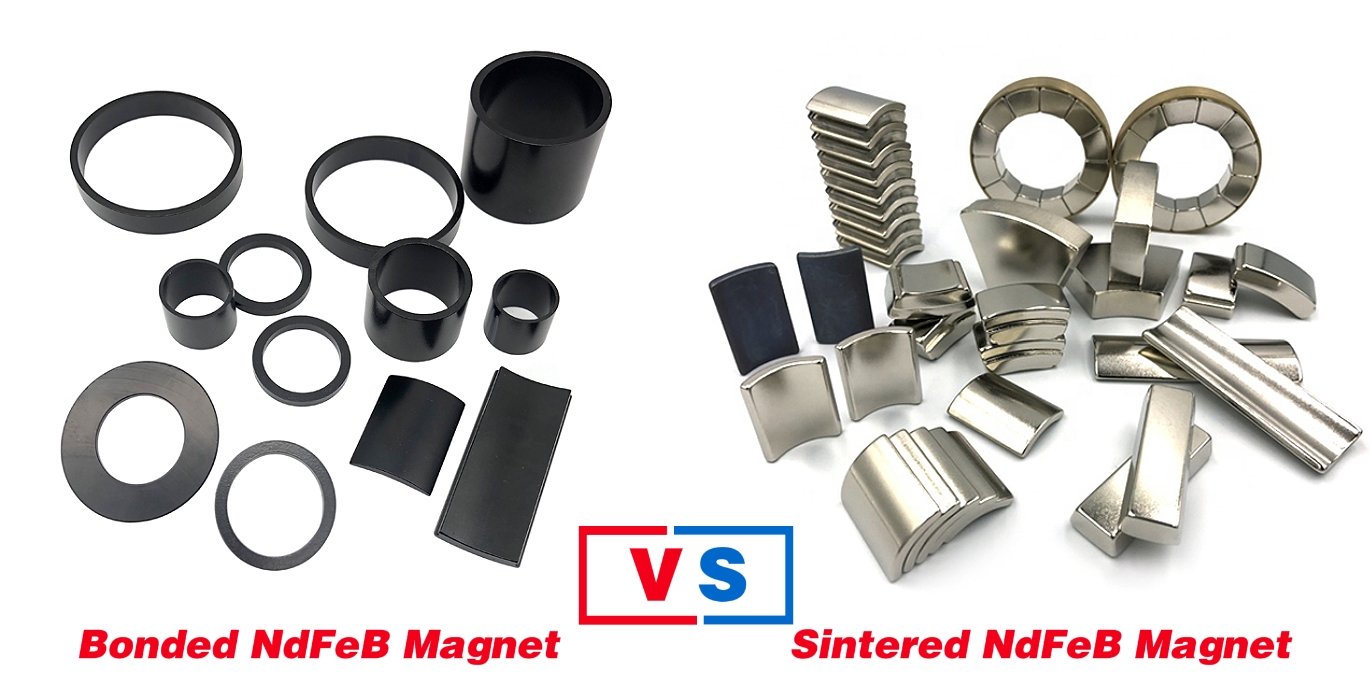
The fundamental difference between bonded and sintered neodymium magnets lies in their manufacturing processes, which directly shape their performance and usability.
Sintered neodymium magnets are produced through a high-temperature powder metallurgy process, resulting in exceptional magnetic energy product (33-52 MGOe) but making them hard, brittle, and prone to chipping or cracking during machining. They also have poor corrosion resistance and require expensive surface coatings for protection.
Bonded neodymium magnets, by contrast, are made by mixing neodymium magnetic powder with a polymer binder, then compressed or injection molded into shape. While their magnetic strength is roughly 50-70% of sintered magnets, they deliver unmatched dimensional precision, flexible shaping, inherent corrosion resistance, and lower mass production costs.
KINGS MAGNET understands that each application scenario is different, and can provide customized magnetic selection and solutions according to customer drawings or specific performance requirements.
In these five situations, you should choose Bonded Neodymium Magnets first.
1. Complex, exotic, thin-walled, or microstructures
Sintered neodymium magnet is brittle and difficult to process in unusual shapes, thin walls, small holes, and many steps, and it is easy to break and has a large loss.
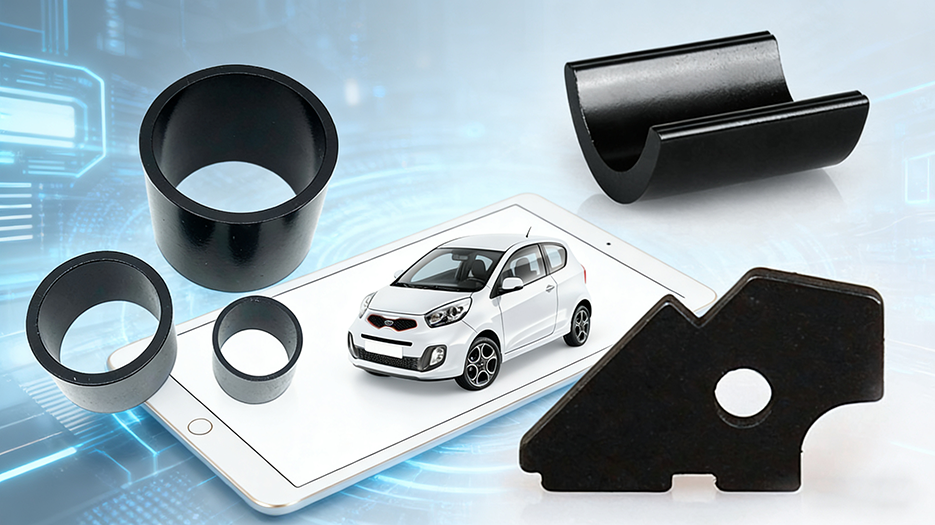
Bonded neodymium magnet can be formed as a whole: ring, wavy, thin sheet, long strip, porous, irregular shape, even embedded composite, with size accuracy of ± 0.01mm, no secondary machining is required.
2. Control costs, mass production
The utilization rate of bonding material is high, there is little waste, the process is short, and the cost of mass production of molds is low. With the same specifications, the price is about 1/3 to 1/2 of that of sintering. The cost advantage is very obvious for miniature and massive items (such as motors and sensors).
3. Requires high corrosion resistance and minimal surface treatment
Sintering is prone to rust, and must be galvanized/nickel/epoxy. The adhesive is wrapped in resin, naturally corrosion-resistant, more stable in salt fog, and durable in harsh environments. Reduce the plating process, reduce costs and speed up.
4.Multi-pole magnetization, flexible magnetic field design
The bonded neodymium magnet is mostly isotropic and can be magnetized in any direction: multi-polar, radial, oblique, and composite magnetization, suitable for precision motors and sensors. Sintered neodymium magnet is mostly anisotropic, with a single direction of magnetization.
5. Lightweight, high toughness, impact resistance
The bonding density is lower (about 6g/cm³), the toughness is good, it is not easy to break, and the anti-vibration impact is stronger. Suitable for consumer electronics, automotive, portable devices, lighter and more friendly.
Which scenarios still require sintering
It’s critical to note that bonded neodymium magnets are not a replacement for sintered neodymium magnets in every scenario. Sintered neodymium magnets remains the only option for applications demanding extreme magnetic strength (like large industrial motors, wind turbines, and MRI machines) and high-temperature operation (continuous use above 150℃).
In short, medium magnetic field, complex shape, high precision, large batch, corrosion resistance, lightweight, choose bonded neodymium magnet.Select sintered neodymium magnet with super magnetic force, extreme high temperature, and ultra-high power.With years of experience, KINGS MAGNET provides you with the best magnetic circuit design.






 Scan to wechat :